Difference Between Kerrison and Pituitary Rongeurs
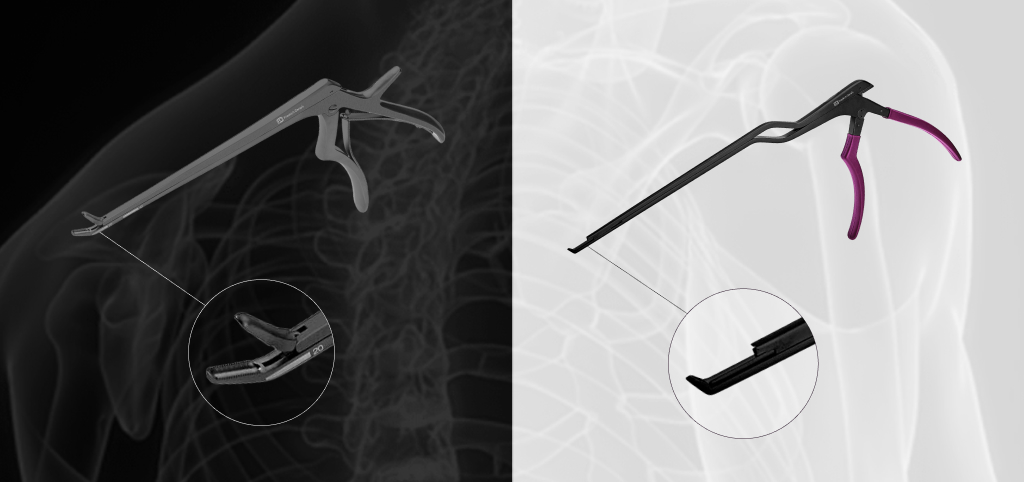
In precision-driven fields like neurosurgery, orthopedics, and spinal procedures, selecting the right surgical instrument is paramount. Among the most commonly used tools are Kerrison Rongeurs and Pituitary Rongeurs—both essential for bone and soft tissue removal, yet distinct in design and function
Understanding the differences between these two instruments ensures optimal surgical performance and better patient outcomes.
What Is a Kerrison Rongeur?
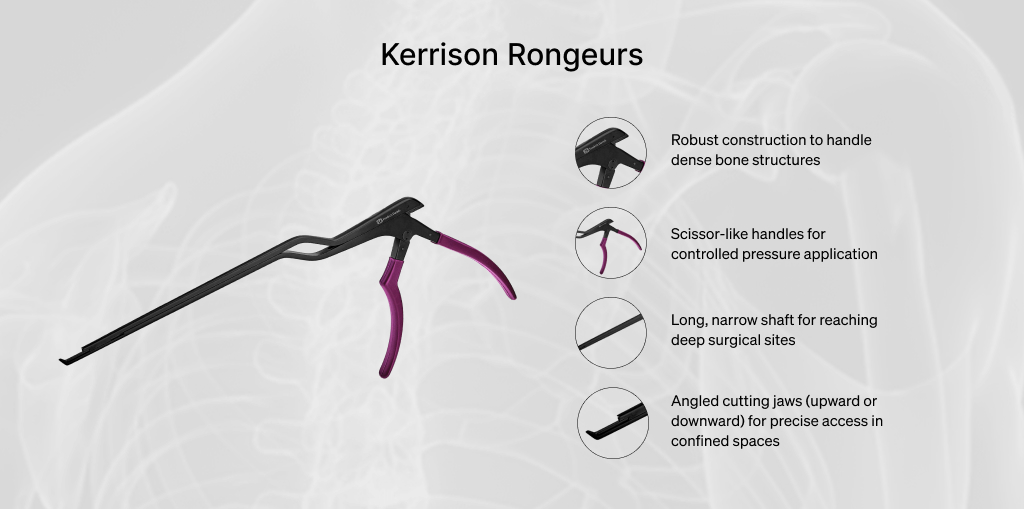
A Kerrison Rongeur is a specialized surgical instrument designed for bone removal, particularly in spinal and cranial procedures. It features:
- Angled cutting jaws (upward or downward) for precise access in confined spaces
- Scissor-like handles for controlled pressure application
- Long, narrow shaft for reaching deep surgical sites
- Robust construction to handle dense bone structures
Common Uses of Kerrison Rongeurs
- Laminectomies & Spinal Decompression – Removing small portions of vertebral bone to relieve pressure on the spinal cord or nerves
- Craniotomies – Precision bone cutting in neurosurgical procedures
- Orthopedic Surgeries – Fine bone shaping where precision is critical
What Is a Pituitary Rongeur?
A Pituitary Rongeur, though similar in appearance, is designed for soft tissue and cartilage removal rather than bone. Its defining features include:
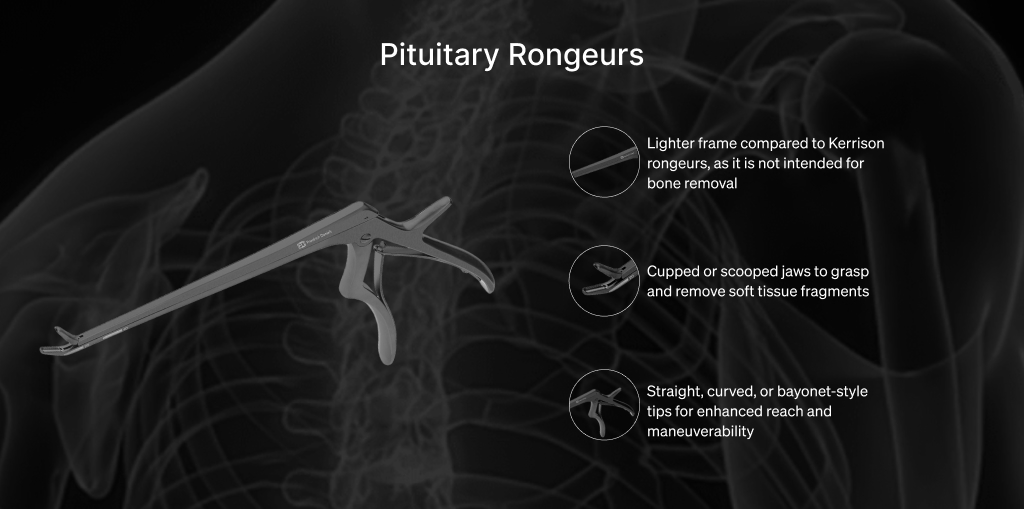
- Cupped or scooped jaws to grasp and remove soft tissue fragments
- Straight, curved, or bayonet-style shafts for enhanced reach and maneuverability
- Lighter frame compared to Kerrison rongeurs, as it is not intended for bone removal
Common Uses of Pituitary Rongeurs
- Discectomies and Spinal Surgeries – Removing herniated disc fragments
- Transsphenoidal Pituitary Surgery – Accessing the pituitary gland through the nasal passage
- Soft Tissue Tumor Removal – Extracting small lesions or fibrous tissue
Key Differences Between Kerrison and Pituitary Rongeurs
| Feature | Kerrison Rongeur | Pituitary Rongeur |
| Primary Use | Bone removal | Soft tissue removal |
| Jaw Design | Thin, angled cutting jaws | Cupped, scooped jaws for grasping |
| Durability | Heavy-duty for bone cutting | Lighter, designed for delicate tissue |
| Common Surgeries | Spine, cranial, orthopedic | Disc, soft tissue, pituitary gland |
Both instruments are essential in neurosurgical and spinal procedures, ensuring precision and safety when removing bone or soft tissue.
Choosing the Right Rongeur: Surgeon Preference & Customization
While standard Kerrison and Pituitary Rongeurs are widely available, many surgeons require customized variations to enhance ergonomics, reduce fatigue, and improve surgical efficiency.
Factors that influence the choice include:
- Jaw Size & Shape – Custom angles and cup sizes for better access
- Handle Design – Ergonomic grips to improve control and reduce hand fatigue
- Material & Coating – High-grade stainless steel with anti-corrosive coatings for durability
Why OEM Chosse Friedrich Daniels for Precision Rongeurs Manufacturing
At Friedrich Daniels, we specialize in manufacturing custom Kerrison and Pituitary Rongeurs that meet the highest standards of surgical precision, durability, and ergonomic performance. Our expertise in precision engineering and high-quality materials ensures that every instrument delivers exceptional performance in the operating room. Whether you need Whether you need custom jaw angles, ergonomic handles, or specialty coatings, our team is dedicated to crafting instruments that enhance surgical precision.
Looking for custom-made Kerrison or Pituitary Rongeurs?
Contact Friedrich Daniels today to discuss your surgical instrument needs.